Sunday, February 27, 2011

Bruce L. James (July 13, 1920 - February 21, 2011)


Funeral services for Bruce L James are set for Saturday February 26, 2011 at 10 am at the Coffman Funeral Home Chapel in Jasper, Ark with the Pastor Vernon Fowler officiating. Burial will follow in Jasper Cemetery under the direction of Coffman Funeral Home. Bruce L. James, 90, was born July 13, 1920 in Newton County, Arkansas. He was the oldest boy of twelve children born to Dewey and Velma James. He married Ella Mae Hayes July, 1947 in Marshall, Texas. Bruce entered active service on August 29, 1942 and received training as a Medical Non Commissioned Officer. He was assigned to the 67th Evacuation Hospital, 3rd U. S. Army. His unit landed on Utah Beach, Normandy on June 17, 1944. The Hospital was set up throughout France and Germany before being setup at Malmedy, Belgium in support of the Battle of the Bulge. He was discharged from the service on November 25, 1945 at the rank of Staff Sergeant. Bruce started a career with Halliburton Services after returning from World War II. He was District Superintendent with Halliburton and worked in several cities in Texas. He retired after 27 years of service and he and Ella Mae moved to Marshall, Texas. During his time in Gainesville, he was active in the community, serving in his church, Rotary Club and as President of the Leopard Booster Club. He loved sports including Leopard football and was a staunch Arkansas Razorback fan. As an avid golfer, his regular group of Gainesville golfers was named the “Thundering Herd”. He enjoyed doing everything with family including hunting, fishing and get-togethers. He was a 32nd degree Mason and was a member of the local chapter of American Petroleum Institute. He is survived by his wife, Ella Mae of Gainesville, Texas; son, Tommy James and wife, Kay of Gainesville; son, David James and fiancé, Deborah Vaughan of Chandler, Texas and son, Steve James of Gainesville; grandchildren, Lori Prestage and husband, Randy of Gainesville; Lindsay Dodson and husband, Colby of Gainesville; Jason James and wife, Libby of Krum, Texas; Ashton James of Pilot Point, Texas and Nikki James of Tyler, Texas. Great Grandchildren include Landon Prestage, Kennedy Dodson, Jaxon James, Madison James, Hudson James, Aaron Swindle and Hunter Swindle; brothers, Lytle James ,Gerald James; Lex James and sisters, Hazel Peoples, Goldie Knotts , Sue Nell Morris and Jean Hudson . He was preceded in death by his parents, sister, Vala Butts and brothers Tom James, George James and Harold James.
Visitation will be at George J. Carroll and Son Funeral Home in Gainesville, TX on Wednesday from 6:30 to 8:00. You may sign the on-line registry at www.geojcarroll.com.
Visitation at Coffman Funeral Home in Jasper will be from 6 to 8 p.m. Friday, February 25, 2011.
In lieu of flowers, donations may be made to the Cooke County Home Hospice

Saturday, February 19, 2011

Gun Safety According to Bruce Lavern


It is said that we do not inherit the earth from our parents; we actually borrow it from our children.  That is why it is important that each generation teach the next generation the values, traditions, and skills that they have learned.  That way, the next generation will be ready to manage the earth that we have been holding in trust for them.  The James family is rich in traditions passed from one generation to the next over the years.  One of my favorites is the tradition of hunting.  It is wonderful to see young children at deer camp running and playing.  Of course, the little ones are not out in the woods hunting, but they are part of “deer camp” and they start learning the camp culture early.  When they get a little older, they go on short ventures squirrel hunting with Dad and the other adults.  Eventually they are allowed to go with an adult to a deer stand and finally after many years they are allowed to venture out on their own. 

Deer hunting is an annual event like Christmas and, like Christmas; it does not come often enough or last long enough to satisfy those who love it.  Squirrel hunting, on the other hand, can be learned early and enjoyed for a much longer season.  Most of the younger boys hunted year round with a bean flip or sling shot as some call it.  They followed the squirrel dog through the timber all over the mountain until the dog chased a squirrel up a tree.  Then, the hunters surrounded the tree and flung rocks with their bean flips until they knocked the squirrel out of the tree.  Sometimes they got the squirrel and sometimes the squirrel got away. 

As the kids got bigger and the times got better, they got to use a .22 rifle.  Grandpa had a small single shot rifle.  It is so small that it resembles a toy.  But, when shells were available and the dog was doing his job, you could count on a mess of squirrels for dinner.  Many of the young boys were introduced to the mechanics of hunting by tagging along. When the dog treed, they would go with their father or uncle to where the dog was barking.  Often, the hunter would send the young boys around to the other side of the tree.  As the clumsy kids clattered around the tree, the squirrel would move to the opposite side of the tree providing a clear shot for the real hunter.  Occasionally, the adult would allow one of the kids to actually make the shot.  After that happened a few times, the boy knew it would not be much longer before he would be allowed to carry a gun into the woods.

Donnie and I loved to be in the woods.  If any adult even mentioned going hunting or fishing, we begged to go along.  Occasionally, we would hide the squirrel dog and tell one of the uncles that we would go find the “lost” dog if we could go with them hunting.  His dad, my dad, uncle, friend, whoever was going, we wanted to go, too.  Now, that was just part of the begging routine.  The other part was to ask if we could carry guns.  It was a ritual sort of like Charlie Brown and the football.  He tried to kick it every time and Lucy moved it every time.  We asked and begged to carry a gun every time and we were told no every time.  Every time, that is, until one day Bruce Laverne and David were home for a visit and Bruce decided to go squirrel hunting.  He may have decided to go squirrel hunting because we had asked him to take us about a hundred times since daylight.  But, he decided to go anyway.
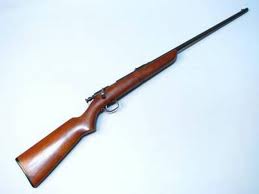
We ran to the back bedroom and got down the rifles and shells.  Yes, rifles with an “S”.  By this time, Gerald and Lytle both had several guns on their bedroom wall and we younger boys knew all about each one.   We got one for each of us and went back out to the front porch.  “Wait a minute.  What are you doing with all those guns?” Bruce asked.  “Well, if we are all going hunting, we all need guns,” came our reply.  To our amazement, he did not tell us to get those guns back in the house.  Instead, he told us to gather ‘round because we needed to understand some things before we went to the woods.  In those days, late 1950s or early 1960s, there were no hunter safety classes.  There was only what the older generation taught the younger generation.  Bruce told us about how to carry and handle the guns.  He also told us there would be no loaded guns.  We were to carry the guns empty and when we arrived at the spot where Bob (the squirrel dog) treed, then and only then would we load the guns.  After a few more minutes of instruction, we turned loose Bob and he headed over the hill toward Brasel Creek with all of us following behind.

As we wandered the hills, once in a while one of the boys would catch the eye of another and pointing to his rifle mouth the words “we have guns.”  The squirrels evidently had heard that the new hunters were on the prowl and that they had GUNS not just bean flips because they were few and far between.   As usual, competition and rivalry got us in trouble.  We were thinking ahead to how fast we could shoot when and if we ever found a squirrel because one by one we each slipped a cartridge into our rifle preparing for the big event.  The big event turned out a little different from what we had imagined.

Bruce came to a large downed log and sat down.  “Boys, gather ‘round here, I need to talk to you.”  We sat on the log beside him and waited for our next instructions.  “Remember, I told you safety is the number one rule when you have a gun in the woods.  One of the rules I told you for today was not to load your gun until we got to where Bob was treed.  Now, open those bolts and let me see those empty chambers.”  Oh my goodness.  One by one, we each slowly pulled back the bolt of our rifle to reveal a cartridge in the chamber.  Game over!  “You all are not ready to go hunting with me.  Give me all your shells.” 

Bruce did not get angry.  He did not yell and tell us how bad we were.  We already knew.  After he gathered up all the ammo, he simply said, “Let’s go to the house.”  With that, he stood up and began walking up that long hill back to the house with three heartbroken little boys following him.  David, Donnie and Tony had blown an early opportunity to show maturity.  However the lesson of that early failed hunt would last a lifetime.  I do not remember that hill ever being tougher to climb than it was that day.  

Insult was added to injury when we got back to the house.  We laid the one or two squirrels that we had killed on the step and went in the house for a minute.  When we came back out our bounty was gone!  A quick survey of the area revealed dogs out in the pasture pulling and fighting over a squirrel carcus.  Not only had we go busted by Bruce on our first real squirrel hunt, we did not even get to keep the squirrels.  I guess, Bob and that other stupid hound had a much better day than we did.  I never had an opportunity to hunt with Bruce again.  But, I never take gun safety for granted and I never check the chamber on any gun without thinking of Uncle Bruce. 

Years later, I think about Bruce’s decision to immediately end the hunt and go home.  I bet he learned that from his Dad at the card table.  Remember, if there was any cheating at the table, everyone went home.  Thank you, Uncle Bruce, for teaching us that lesson.

And that's the way I heard it on the mountain,
Tony Peoples

Sunday, February 13, 2011

Tony Needs Spell Check

Before there was spell check there were mothers and grandmas. Tony’s forte is not and never has been spelling.  He and Donnie both struggled with penmanship to say the least, but spelling, Tony was the worst hands down.  It was that way from the beginning. In first grade I had one of my first spelling tests.  Grandma was in Kansas City for a visit and being a school teacher she was always eager to tutor her grandchildren.  She asked to see my test and I reluctantly handed it over.  She began to scan down the page. I could tell she was disappointed.  At one point she could no longer contain her displeasure, “Why? Tony, you missed Hen!”  I was nearly in tears and responded, “No, grandma, I only missed nine.”  Grandma enjoyed telling that story for many years afterwards.


And that's the way I heard it on the mountain,
Tony Peoples


If it were not for a keyboard and spell check, I can promise there would not be any “Heard it on the Mountain” from me.  I thank God for spell check and I thank God for my Grandma who assured me after that disastrous spelling test, “Just because you can’t do it now, that doesn’t mean you can never, do it.  Don’t give up.”

Saturday, February 12, 2011

Sue Nell Fell in the Well…

We take water for granted.  Just walk over to the faucet, turn the handle and get a drink, Right?  In the beginning, on our mountain farm there was no faucet. In fact, there was no running water in the house at all.  The water was carried from a spring located about three hundred yards down the hill.  Walk across the road past the mailbox, follow that fence down the hill a couple of hundred yards, and you will find a spring.  They carried water to the house from that spring several times a day.  The spring was not only the family’s water source, it was the closest thing they had to refrigeration.  So, milk and butter had to be carried to and from the spring as well.  Can you imagine the stories and adventures that took place on those treks up and down that hill?


There were two other sources of water available.  They were Moss Spring and an old well in the field below the road.  Moss is the family name of the people who originally owned the farm.  There is a spring behind Gerald and Betty’s house that carries the name Moss Spring.  If you walk through the field below the road, you may still find a certain rock pile.  That rock pile is a result of filling in an old well that used to be there.  That well was used for years to water livestock and to supply an annual cane sorghum grinding operation that will be written about later.  These other two sources, however, were not always reliable or as good as the one they used.  That one was so good, in fact, that Gerald and Betty used it for their water source until 1983 when Mockingbird Hill Water Association water was brought to both homes.  It would probably still be a good water source today, but it is still a long, long way from the house.  That is probably why just a few years after moving in, Grandpa and Grandma decided to dig a well closer to the house.


Now, just how could one decide where to start digging and if there might even be water down there?  The science of the 30s was a little different than now. An old man by the name of Jim Carter, a water witch, came out to the house with a Willow tree branch that was called a divining rod.  It looked a little like a large wishbone from a turkey.  With one side of the fork in each hand and the tip pointed skyward, through channeled energy, spiritual guidance, or some other mystery, he was led throughout the yard and grounds. Finally, with a downward thrust, the empowered rod dove into the turf.  “There you go, that’s where the water is!”  Based on that divine insight, that is where the well is today, just on the south side of the house.


The well was dug by hand.  They would dig down with pick and shovels and then lay stone and concrete to keep the earth walls from caving in. The James boys, mostly Bruce, did the digging and Glen Brasel probably helped laying the stone.  It took several days to complete a job like this.  Any new construction project brought curious children to watch and worried mothers to watch out for them.  Sue Nell was one of the children watching and Grandma was watching her.  There is no telling how many times someone told her, “Sue Nell, stay back, you will fall in the well.”  She should have been told a few more times I guess.  One day when the crew quit for lunch, they threw a couple of sheets of roofing tin over the hole and went in the house to eat.  We know that curiosity killed the cat.  Sue thought curiosity had killed her.  Sure enough, Sue Nell fell in the well and I expect her screams could be heard clear over to Scenic Point.  Everyone rushed out and Bruce Laverne reached down and pulled his baby sister out of the well.  Fortunately for Sue, it was only around six foot deep at the time.


Sue says that she was so young that she actually does not remember the incident.  The teasing, on the other hand, has gone on for over seventy years.  Grandpa had a nickname for everyone and “Sue Nell fell in the well” was here to stay.  Others added to it making, “Sue Nell fell in the well, thought for sure she’d gone to hell.”  You thought your little nickname was tough?  How would you like that one?  Today, Sue is real quick to add, “but she didn’t go to hell because she met Jesus.”

Sometime later, one of the neighbors was digging a well.  He wanted Sue to come over and fall in to his well.  He said that the one here was the best he had ever seen and he wanted his to be just like it, complete with Sue Nell falling in the well for good luck.

The well has been spectacular.  It was the only water source until 1983 when rural water came to the house.  There is so much more to be written about this well and water on the mountain, and we will share more stories another time.  What can you remember about the well?
And that's the way I heard it on the mountain,
Tony Peoples

Grandma's Hearing Test

Most of the James family suffer from hearing loss as they get older and depending on the situation it is either a blessing or a curse.  It is indeed a serious impairment, but it has provided a few moments of humor along the way.  One day Betty had walked by the mailbox and picked up Grandma's mail.  Grandma was sitting on the porch as Betty walked up the drive with the mail.  Grandma called down to Betty as she walked, "Well, did I get anything interesting in the mail?"  Betty answered, " I see you have a card from Beltone for a free hearing test."  "Why would I want a urine test?"  Grandma replied. "No! I said its a free HEARING test".  "Oh! well, I don't need a test for that, I already know I can't hear!"
And that's the way I heard it on the mountain,
Tony Peoples

Grandpa Dewey on Fair Play


No Cheating Allowed                           


Dewey was the biggest kid in the game.  He was often right in the middle of a card game or board game with the kids.  He loved to play and he loved to win.  One thing he did not love was cheating.  There was a strict no cheat policy and he had an absolute way of enforcing it.  If anyone was caught cheating, or even fighting, it was game over and the offender was sent home.  In fact, everyone was sent home and the game was ended for the day.  That is another reason why the table games were so much fun at the James house.  You could be sure everyone would play fair or else.  There now, isn’t that simple and effective?  You probably thought zero tolerance was a new thing. It started in the James household in the 1930s.
And that's the way I heard it on the mountain,
Tony Peoples

Saturday, February 5, 2011

Mitchell’s Riverside Car Wash

By 1950 Mitchell and Hazel gave up on making a living in Newton County and in December they moved away.  Like so many others, they moved to the Kansas City area to work in factories.  Mitchell went to work for Sheffield Steel where he made more money than he ever would in Jasper.  In fact, things went well enough that in 1956 he bought his first new car, a 1956 Chevrolet Bel Air.  It even had a Poweglide automatic transmission.  He, Tom, Billie Morris, and J.C. Hudson all bought new Chevrolets that year.  Yea, car nuts, four brand new 1956 Chevrolets.  They were great cars alright and they were also reliable for the trips back to Arkansas at least once a month.  I think it also helped show all the folks back in Newton County that going to Kansas City might not be as bad an idea as first thought.
Trips back home were a regular occurrence and Dad always made certain to drive to town a couple of times so people would see his new car.  That was one reason he went.   I suspect another reason was to drop by Uncle Walter’s and pick up a little alcohol.  Newton County was and still is a dry county, but Walter always had a little extra to share.  Mitchell would take the kids fishing, swimming, or just for a ride in order to show the brand new car off to his old friends.
One trip he decided to take Velma Francis and Tony swimming.  They drove right down to the Little Buffalo River under the Jasper Bridge.  After playing in the water awhile, Mitchell suggested they wash the car.  To make it more fun, he backed the car right down to the water’s edge.  Actually, he put the rear wheels in the water.  Mitchell must have enjoyed whatever he picked up from Walter because he sat in the shade and watched while the kids washed and played around the car.  When it came time to leave, we piled in and away we went.  At least that was the plan.  Evidently, the tires began to spin and Mitchell must have panicked.
Remember that Powerglide automatic transmission?  The early  GM automatic transmissions did not have the same arrangement of gears on the selector that most cars have today.  Most today start at the top with park and continue with R for reverse, N for neutral, D for Drive and L or 1 for low gear.  The early General Motors automatic only had 2 forward speeds not 3, 4, or 5 like today’s transmissions.  In those early years the selector order was Park, Neutral, Drive, Low, and Reverse.  Yes, if you pulled the lever all the way down it was in reverse.
When the tires spun, the car slipped a little further into the Little Buffalo.  Velma was scared of the water and began to scream thinking we would all surely drown or float clear to the Arkansas River.  Mitchell had driven old column stick shifts for years and the low (power) gear was located at the bottom position of the lever. He jerked the lever down and stepped on the gas.  The brand new Chevy almost became a brand new boat.  It lurched backward into the river.  Water began running in around the doors.  Velma was screaming, “We’re all gonna die!” and I was starting to believe her.  Mitchell struggled to get the car back in a forward gear and headed the other way as water began to rise into our laps.  Of course by now it was a lost cause and with two screaming kids he was not going to win this battle between him and the river.  He got us out of the car and made a few more attempts before he too was sitting in water over his lap.  The car was still running but the rear tires were not getting any traction.  The whole rear deck and back seat were under water and the front seat bottom was covered.  Mitchell gave up when the water level reached the dash.   He walked up to the service station and got a wrecker to pull his new 1956 Chevrolet out of the river.  It was a great car but not a very good boat.

I don’t remember Mitchell ever taking another car down to the river for washing.  That was not the only time that 56 Chevy was under water, but I will save that story for another time.


And that's the way I heard it on the mountain,
Tony Peoples